Business Transformation for Established Companies

Has your business become harder to run as it has grown?

I help established companies fix the gaps between people, processes, data and technology so the business works as one connected system.

Fix the gaps. Connect the business.

A focused conversation to understand the challenge and identify the right next step.
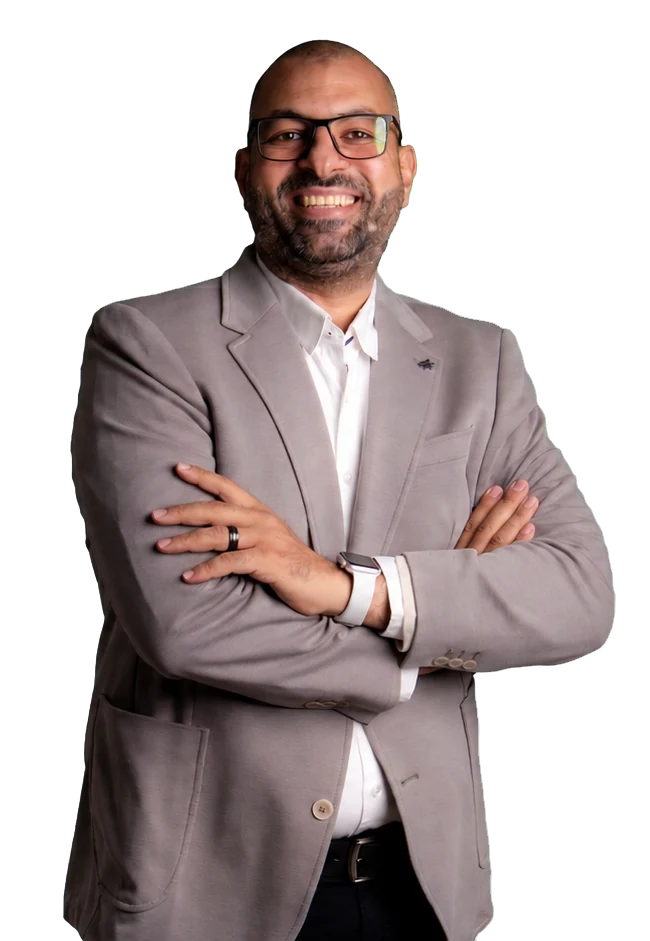
Gehad El-Sobky

EXPERIENCE BUILT ACROSS BUSINESS AND TECHNOLOGY

25+ Years of Business & Technology Transformation Experience

Helping organizations across Egypt, Saudi Arabia and the GCC connect business, technology and operations more effectively.

Selected Organizations I’ve Worked With

  • 3D Tech
  • Creative Juice
  • GIZ
  • Impact
  • LOGIC
  • MigrationIT
  • Mohamed Aboelnaga
  • One Stack
  • Power Strength
  • Practex
  • Premiere Casing Services
  • Puvana
  • Smart Village
  • Sokhna Hills
  • Tabali
  • Upedia

WHEN GROWTH OUTPACES ALIGNMENT

Growth should not create more chaos.

As businesses grow, teams, processes, information and systems often evolve separately. The result is more coordination, more dependency and less visibility across the business.

  • Owner Dependency

    Too many decisions, exceptions and operational issues still depend on the owner or a few key people.

  • Disconnected Departments

    Teams work with different priorities, processes and information, creating delays and weak handoffs.

  • Unclear Workflows

    Critical work depends on individual experience, manual follow-up and inconsistent ways of working.

  • Fragmented Data

    Management cannot quickly see what is happening or know which information can be trusted.

  • Underused Technology

    Systems exist, but teams continue working around them because the technology does not fit the real workflow.

  • Growth-Driven Complexity

    More people, branches and tools create more coordination work instead of greater control and performance.

Transformation starts by finding where the business is disconnected—not by adding another tool.

Request a Business Transformation Diagnostic

A CONNECTED BUSINESS

The problem is often not inside one department. It is in the gaps between them.

Each department may understand its own responsibilities. But the real business journey moves across departments.

When responsibilities, decisions, information and technology do not move smoothly from one team to another, the whole business slows down.

  • People
  • Processes
  • Data
  • Technology
One Connected Business

Fix the gaps. Connect the business.

TRANSFORMATION OUTCOMES

What a connected business looks like

The purpose of transformation is not to add more systems, reports or management layers. It is to create a clearer and more reliable way for the business to operate.

  • Clarity and Accountability

    Clear roles, responsibilities and decision rights, with less dependency on the owner or key individuals.

  • Connected Operations

    End-to-end processes, stronger coordination between departments and less duplication and rework.

  • Trusted Performance Visibility

    Reliable management information, meaningful KPIs and faster, better-informed decisions.

  • Adoption That Lasts

    Technology that fits the workflow, stronger employee ownership and an operating model built for continuous improvement.

WHO I HELP

Built for the people accountable for what happens next

I primarily work with established companies with 50–249 employees, where growth, expansion or transformation has created operational complexity across multiple departments.

I selectively support companies with 25–49 or 250–300 employees when there is confirmed operational complexity, as well as defined initiatives within larger organizations.

Owners and Founders

For business owners who need to regain control, reduce operational dependency and build a company that can grow without constant intervention.

CEOs and Managing Directors

For executives who need clearer accountability, stronger execution and more reliable visibility across the business.

Operations and Transformation Leaders

For leaders who need to improve end-to-end workflows, remove recurring bottlenecks and coordinate departments, systems and decisions.

Leadership and Functional Teams

For organizations that need practical capability in AI, transformation, process improvement, performance or change adoption.

SERVICES

Three connected paths, not three separate offers

The right service depends on who owns the problem, who will perform the work and what outcome the organization needs.

Consulting

Best for: Owners, CEOs and transformation leaders.

For organizations facing a real cross-functional business problem that requires diagnosis, redesign and guided implementation.

  • Business Transformation Diagnostic
  • Solution Design Phase
  • Ongoing Transformation Advisory

Mentoring

Best for: Executives and practitioners who will own the work.

For leaders and practitioners who will own the work but need an experienced adviser to guide decisions, review progress and strengthen their approach.

  • Executive AI Productivity Mentoring
  • Business Transformation Leader Mentoring
  • Business Analysis & Solution Design Mentoring

Corporate Training

Best for: Leadership and functional teams.

Customized learning programs that connect practical methods with the real roles, workflows and priorities of the organization.

  • Function-Specific AI Productivity
  • Business Transformation for Leaders
  • Process Improvement and Business Analysis

THE C.O.M.P.A.S.S. FRAMEWORK

The C.O.M.P.A.S.S. Business Transformation Framework

Transformation becomes easier to manage when the organization has a clear starting point, a shared direction and a structured path from diagnosis to sustainable improvement.

Continuous Transformation Flow
01 / C

Current State Clarity

Understand how the business really operates, where the gaps are and what is preventing progress.

02 / O

Organizational Vision

Align leadership around the future direction, priorities and measurable outcomes.

03 / M

Mindset & Culture

Prepare leaders and teams to collaborate, take ownership and adopt change.

04 / P

Process Integration

Redesign end-to-end workflows, roles, handoffs, controls and performance routines.

05 / A

Adoption of Technology

Apply data, digital systems, automation and AI where they support clear business needs.

06 / S

Success & Measurement

Define meaningful KPIs, dashboards, review routines and benefits measures.

07 / S

Strategic Steering

Embed governance, learning and continuous improvement so progress continues after implementation.

01 C Current State Clarity

Understand how the business really operates, where the gaps are and what is preventing progress.

02 O Organizational Vision

Align leadership around the future direction, priorities and measurable outcomes.

03 M Mindset & Culture

Prepare leaders and teams to collaborate, take ownership and adopt change.

04 P Process Integration

Redesign end-to-end workflows, roles, handoffs, controls and performance routines.

05 A Adoption of Technology

Apply data, digital systems, automation and AI where they support clear business needs.

06 S Success & Measurement

Define meaningful KPIs, dashboards, review routines and benefits measures.

07 S Strategic Steering

Embed governance, learning and continuous improvement so progress continues after implementation.

Explore the C.O.M.P.A.S.S. Framework

TRANSFORMATION IN PRACTICE

Real business problems. Practical transformation.

Selected examples of how operational problems were diagnosed, redesigned and improved.

Training & Learning Services

Increasing Operational Capacity Without Increasing Overhead

Situation
A growing training company faced increasing operational pressure across Marketing, Sales and Operations while maintaining a relatively lean team.
What Changed
The business gained greater capacity across key functions, more structured coordination and a more connected operating environment without requiring headcount to grow at the same rate as demand.
Read the Full Case Study

Manufacturing

From Founder Dependency to Organizational Intelligence

Situation
Critical technical and project knowledge depended heavily on the founder whenever teams faced complex requirements or unusual situations.
What Changed
The company created a reusable organizational knowledge capability that reduced dependence on individual memory and gave teams stronger historical context for future decisions.
Read the Full Case Study

Outsourcing & Recruitment

From Spreadsheet-Driven Operations to a Connected Business

Situation
Recruitment, HR, Operations and Finance relied heavily on spreadsheets, email and individual follow-up, limiting visibility and increasing operational risk.
What Changed
The business moved toward a more connected operating environment with clearer ownership, stronger accountability and more reliable business information.
Read the Full Case Study

CLIENT TESTIMONIALS

What clients say about working together

Selected feedback from leaders and teams I’ve worked with.

WHY WORK WITH GEHAD

Practical transformation, not generic advice

For more than 25 years, I have worked across business transformation, technology, business analysis, process improvement, organizational change, project delivery, executive development and professional training.

  1. 01

    Start with the business, not the software

    Technology decisions are based on the real process, capability, information and business outcome required.

  2. 02

    An end-to-end operating-model perspective

    People, processes, data, technology, performance and change are considered together.

  3. 03

    Design for adoption

    A technically correct solution creates little value when leaders and employees do not understand, accept or use it.

  4. 04

    Build internal capability

    The objective is not permanent consultant dependency. Leaders and teams become more capable of operating and improving the business.

Explore my experience and credentials

FREQUENTLY ASKED QUESTIONS

Questions before we begin

What size of company is the strongest fit?
The core target is established companies with 50–249 employees. I selectively support companies with 25–49 or 250–300 employees when there is confirmed operational complexity, as well as defined initiatives within larger organizations.
What does “working as one system” mean?
It does not mean using one software platform. It means creating one connected way of working in which people, processes, data and technology support the same business goals.
Do you implement software?
Engagements may include requirements, future workflow design, solution evaluation, implementation governance, testing and adoption support. Technology implementation is normally performed by an internal team or specialist partner.
Is this the same as hiring an ERP, CRM or technology vendor?
No. My work starts with the business problem, workflow and operating requirements before a technology or vendor is selected, so the solution fits the work rather than defining it.
What happens during the Clarity Session?
It is a focused 25–30-minute conversation to understand the challenge, determine whether it fits my work and identify the most appropriate next step. It is not a free assessment or transformation roadmap.

START WITH CLARITY

Ready to see where the real gaps are?

It needs a clearer way to work as one system.

A focused conversation—not a sales call—to understand the challenge, determine whether it fits my work and identify the right next step.

Getting your people, processes, data and technology to work as one system.